Quick answer: Choose drywall screw length according to the total plasterboard thickness, number of layers, framing material and gauge, and the fixing system's required penetration. In some Gyproc light-gauge metal framing systems, a 25 mm screw can secure one 12.5 or 15 mm board, but the relevant system specification takes precedence. Screw length alone does not establish compatibility.
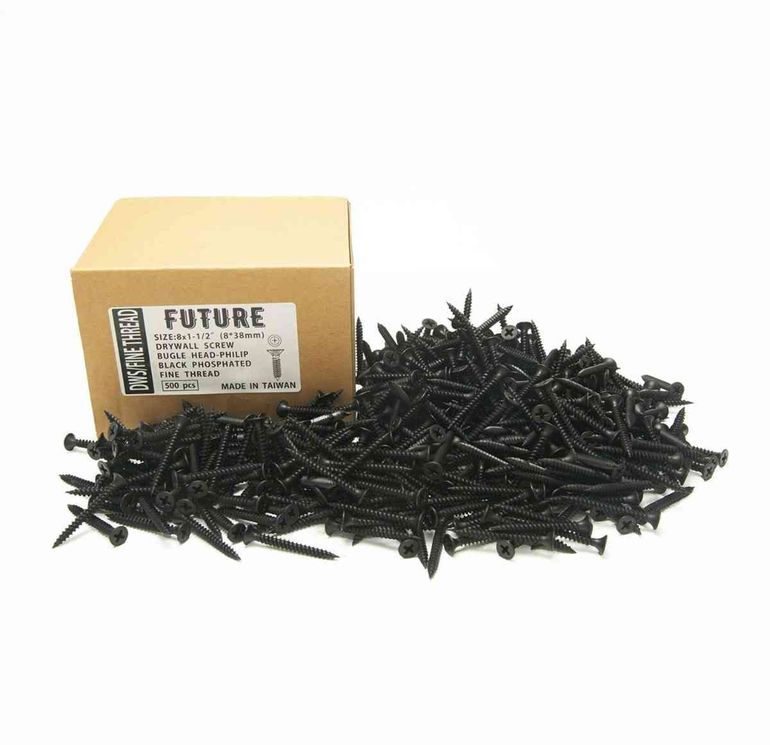
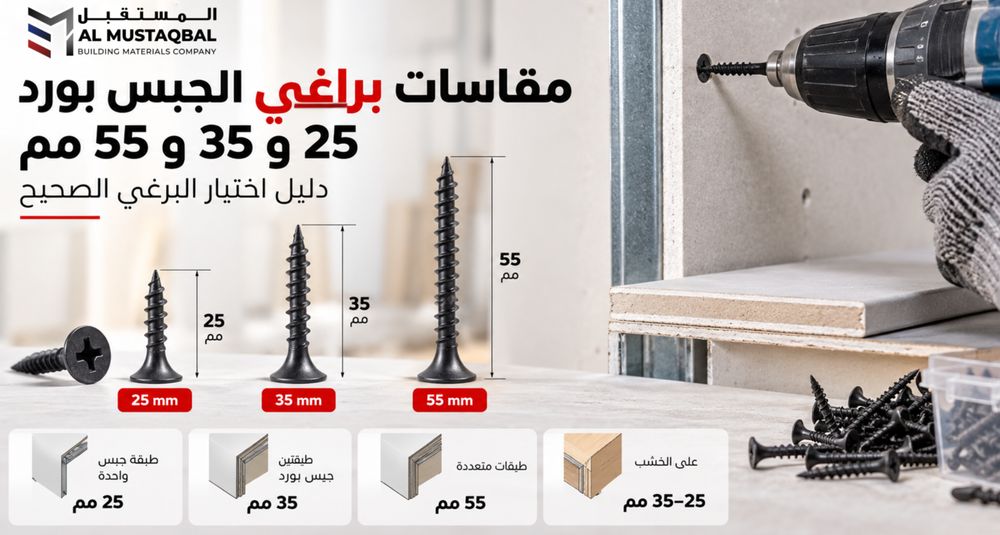
Drywall Screw Size Chart: 25, 35, 42 and 55 mm
Length | Possible application | Check before choosing |
|---|
25 mm | Single layers of certain 12.5 or 15 mm boards on light-gauge metal | Penetration requirement and framing gauge |
35 mm | Selected thicker or multilayer arrangements | Combined board thickness and fixing specification |
42–45 mm | Systems requiring additional fastening length | Manufacturer's system schedule |
55 mm or longer | Some multilayer and specialist systems | Never substitute without the approved system details |
Gyproc's relevant metal-framing guidance specifies nominal screw penetration of 10 mm into the framing and offers drywall screw lengths including 25, 35, 42 and 55 mm. This is specific manufacturer guidance, not a universal rule for every drywall system.
How Do You Choose Drywall Screws for Different Framing Types?
Light-gauge metal studs
Compatible bugle-head drywall screws are commonly used for fixing plasterboard to light steel framing. Gyproc lists its standard drywall screws for certain metal profiles up to 0.79 mm thick. Always confirm the specific board and stud system.
Heavier metal studs
Self-drilling or jack-point tips may be required. Gyproc identifies its Jack-Point range for certain steel framing gauges of 0.8 mm and thicker. Other manufacturers may specify different gauge limits.
Timber studs
Choose screws specified for timber framing, with a suitable thread and sufficient penetration according to the relevant system instructions. Not every screw intended for thin steel framing is suitable for wood.
Fine Thread vs. Coarse Thread vs. Self-Drilling Drywall Screws
Type | Typical use | Key check |
|---|
Fine thread | Selected drywall-to-light-metal applications | Metal gauge and screw specification |
Coarse thread | Many timber framing applications | Wood compatibility and required embedment |
Self-drilling / Jack-Point | Some thicker metal profiles | Approved steel gauge range |
Wafer-head framing screw | Metal-to-metal frame assembly | Not automatically a board-fixing substitute |
How to Calculate Drywall Screw Length
Start with the combined thickness of the board layers at the fixing point, then account for the required penetration or engagement specified by the approved system. Select a standard screw of the correct design. Limited example: a 12.5 mm single board plus a 10 mm nominal penetration requirement suggests a theoretical minimum of 22.5 mm, so a 25 mm screw may be appropriate in a system that expressly permits it. Do not use this shortcut alone for fire-rated, acoustic, ceiling or multilayer assemblies.
Board-Fixing Screws vs. Metal-Framing Screws
Board-fixing screws commonly use a bugle head intended to seat properly without tearing the plasterboard face paper. Metal-framing fasteners may use a low-profile wafer head for connecting metal members. Gyproc provides separate product lines for these different tasks.
Common Drywall Screw Installation Mistakes
- Choosing screws too short for the required penetration.
- Using light-gauge screw designs in thicker steel.
- Driving the head too deep and tearing face paper.
- Substituting unapproved screws in fire-rated or specialist systems.
- Ignoring edge distances and fastener spacing specified for the assembly.
- Using framing screws where board-fixing screws are needed.
Fast Buying Checklist
- Confirm board thickness and number of layers.
- Identify metal or timber framing and measure steel gauge where relevant.
- Check whether the system has fire, moisture or acoustic performance requirements.
- Match screw tip, head, thread and length to the approved fixing schedule.
- Verify available stock and product specifications before ordering.
Shop Drywall Screws and Gypsum Board Accessories in Saudi Arabia
Browse drywall screws and fixings, gypsum board accessories, and metal studs and tracks at Al Mustaqbal Building Materials Store. Check individual product specifications and availability before selecting components.
Frequently Asked Questions
What screw size is suitable for 12.5 mm drywall?
A 25 mm screw may be used in certain single-layer light-steel systems where the required penetration is achieved. Confirm the approved manufacturer details.
Should I use 25 mm or 35 mm drywall screws?
Choose based on total board thickness, framing material and gauge, required penetration and the specified system, not length alone.
Which screws work with thicker steel studs?
Some metal framing systems require approved self-drilling or jack-point screws. Refer to the manufacturer's steel gauge range.
Can drywall screws be used in timber?
Use a model explicitly approved for timber framing with an appropriate thread and embedment.
Are wafer-head screws suitable for fixing drywall boards?
They are commonly used for metal framing connections; do not substitute for board-fixing screws without system approval.
How many drywall screws are needed per square meter?
Quantity depends on wall or ceiling geometry, stud spacing, board layers and the approved fastening pattern. No single number fits every job.
Conclusion
Select drywall screws by system compatibility: board layers, framing gauge, point design, thread and minimum penetration. Compare gypsum board fasteners at Al Mustaqbal Building Materials Store.
Technical References
Gyproc Drywall Screws; Gyproc Jack-Point Screws; Gyproc Waferhead Screws.
Related Products



 Gypsum & Decorative Works