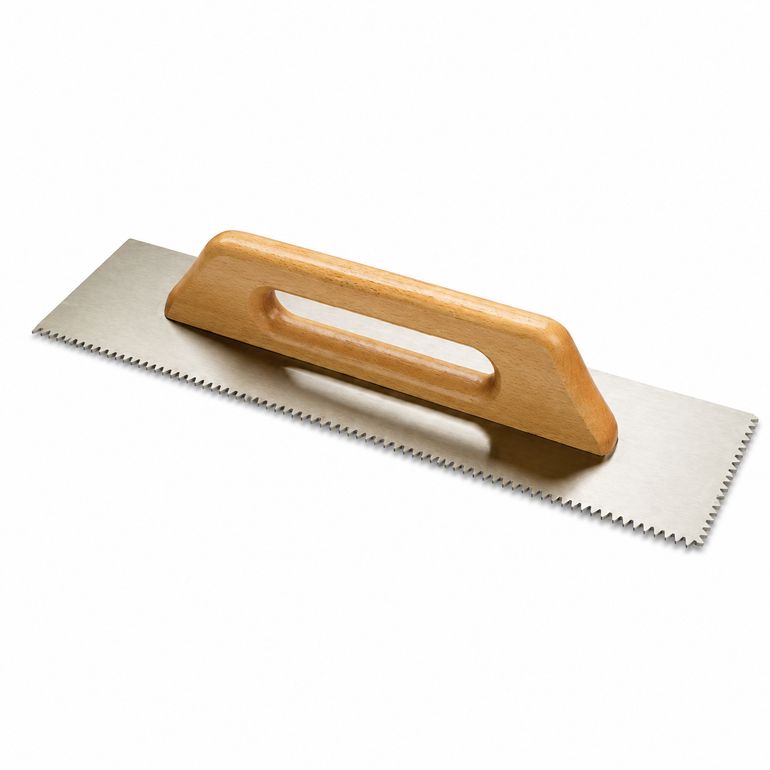
Quick answer: Narrow putty knives work well for small holes and detail repairs. In many drywall systems, 5–6 inch knives are used for bedding joint tape and the first compound coat, while 8, 10 and 12 inch finishing knives help feather wider subsequent coats. Choose blade width by task rather than assuming a wider knife is always better.
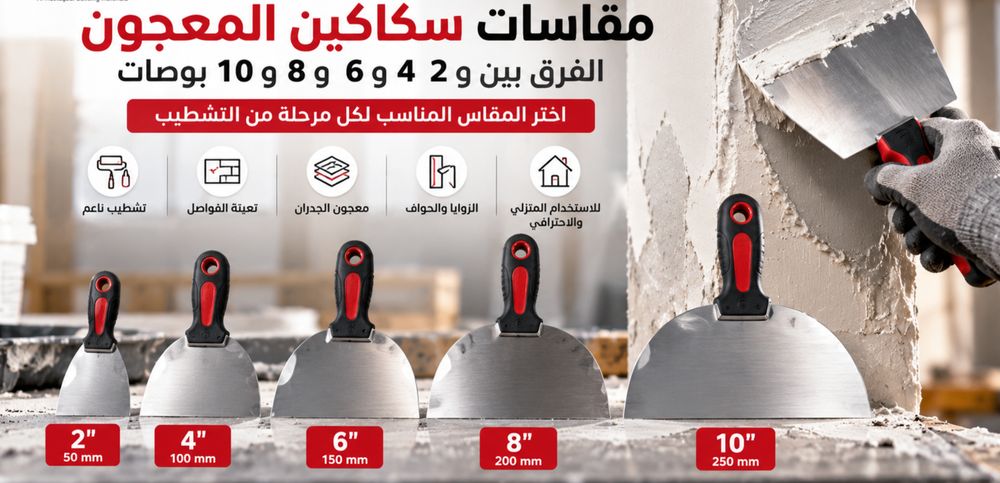
Putty Knife and Drywall Taping Knife Size Chart
Width | Typical use |
|---|
1–2 in | Small holes, fine detail and localized filling |
3–4 in | Small patching and compound application |
5–6 in | Joint tape bedding and first coat in selected systems |
8 in | Second coat and feathering joint edges |
10–12 in | Final joint finishing and wider passes |
14 in or larger | Some broad skim-coating applications |
These are common guidelines, not universal requirements. The Association of the Wall and Ceiling Industry discusses 5–6 inch knives for first coats, 8 inches for second coats and 10–12 inches for third coats.
Flexible vs. Stiff Putty Knives
Flexible blades can help spread and feather compound, while stiffer blades may suit scraping loose material or particular repair tasks. Blade quality, edge condition and handle comfort also matter.
How to Choose a Knife for Each Finishing Stage
- Small patch: select a narrow blade for controlled filling.
- Taping: use a compatible joint knife and the specified tape and compound system.
- Second coat: use a wider blade to soften joint transitions.
- Finishing coat: feather broadly without building unnecessary thickness.
- Large surfaces: review the skim-coating system and appropriate tools.
Why Does a Putty Knife Leave Ridges?
Possible causes include dried pieces of compound on the edge, damaged blades, excessive loading and inconsistent pressure. Keep the blade clean, remove hardened particles and allow compound to dry as specified before sanding.
Stainless Steel or Standard Steel?
Stainless steel may offer useful corrosion resistance and cleaning properties. However, a straight blade edge, suitable flexibility and correct application technique are just as important for a smooth finish.
Common Mistakes
- Using a very narrow knife for broad finishing.
- Applying overly thick layers.
- Recoating before the specified drying or setting time.
- Working with a damaged or contaminated blade.
- Damaging drywall facing paper during scraping or sanding.
- Ignoring compound-specific technical instructions.
Shop Putty Knives and Finishing Tools in Saudi Arabia
Compare putty knives, sanding accessories and painting tools at Al Mustaqbal Building Materials Store. Check blade width and stock before purchasing.
Frequently Asked Questions
What size putty knife is best for a wall?
Narrow knives usually suit small patches, while drywall joints and wide finishing coats often need larger widths.
Is a 10 inch knife better than a 6 inch knife?
They serve different stages: narrower for initial work and wider for feathering the finish.
Why does compound leave raised edges?
Uneven spreading, excess material or an unsuitable blade may cause ridges.
Can I use a putty knife as a scraper?
Some stiffer models can scrape loose material, but avoid damaging the substrate.
When should I sand joint compound?
Once it has reached the dryness or hardness required by its manufacturer.
Conclusion
Match the knife width and flexibility to the repair or finishing stage. Browse available putty knife sizes.
Technical Reference
AWCI — Levels of Finish: Tool Size Matters.
Related Products



 Construction & Finishing Tools