Why Do Metal Cutting Discs Wear Out Fast? 8 Causes & KEDAS Choices
Why does a steel cutting disc wear out too quickly? Faster-than-expected consumption does not automatically mean a defective wheel. Possible causes include a grade unsuited to the material, grinder speed dropping under load, excessive force, workpiece movement, incorrect mounting and improper side loading. Normal abrasive wear, edge crumbling and wheel fracture are different problems, so the response depends on the symptom.
This article supports Saudi workshop buyers choosing published KEDAS metal cut-off wheels in MBMC Store. It provides no unsupported fixed cuts-per-disc claim or promise of a guaranteed lifetime. Never bypass speed limits or guards to improve cutting output.
Normal wear, premature consumption or dangerous damage?
Observed symptom
Possible meaning
Safe next step
Gradual diameter reduction with consistent cutting
Normal abrasive material consumption
Compare controlled work and manufacturer's expectations
Rapid shrinkage with poor cutting action
Wheel grade, material, power or loading mismatch
Stop and review the system, rather than increasing force
Cracked, chipped or fragmented edge
Dangerous damage associated with misuse, shock or prior defect
Stop using the wheel immediately and replace it safely
Sudden jamming or pinch in the kerf
Moving workpiece, closed kerf or misaligned cut
Switch off, isolate power and investigate safe support
This is a practical inspection guide, not remote safety certification. Never attempt to repair or resume operation with a visibly damaged cut-off wheel.
Eight causes of premature metal cutting disc wear
1. Wrong disc for the workpiece material
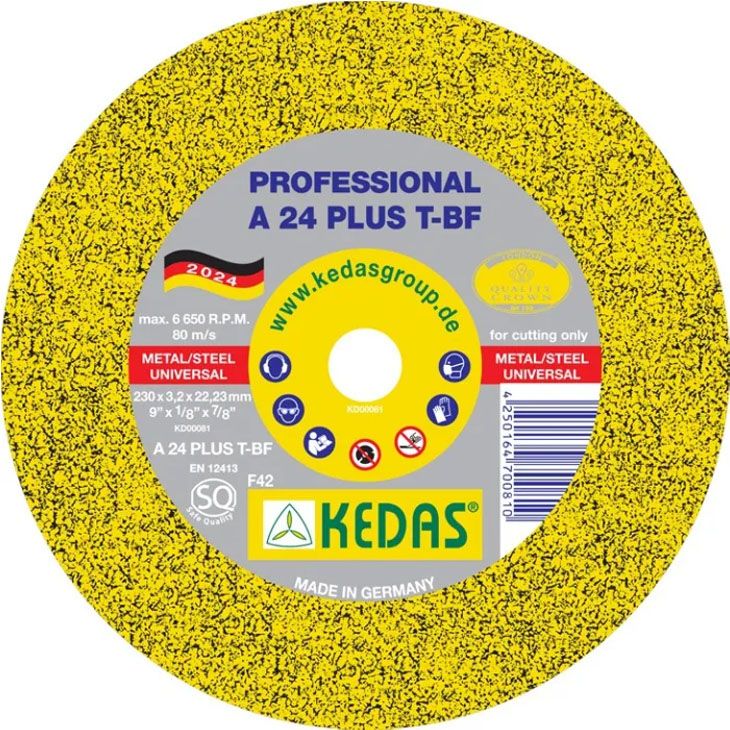
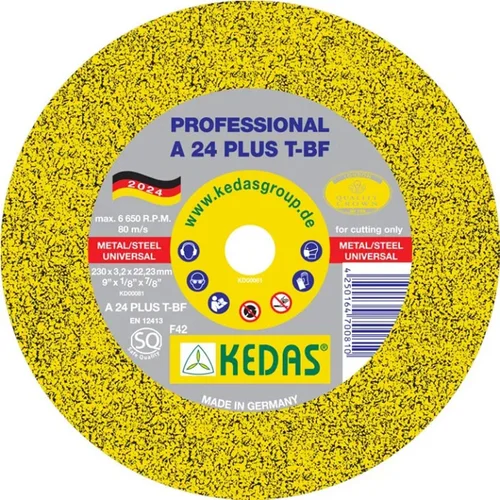
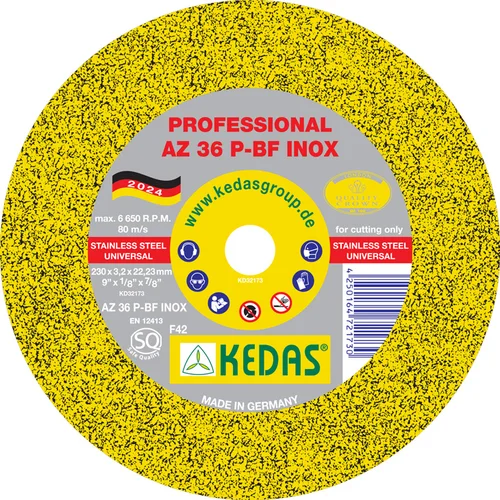
KEDAS A24 PLUS steel 115 mm and KEDAS AZ60 INOX stainless 115 mm have different listed applications. Confirm the actual metal, abrasive rating and manufacturer-approved cutting conditions, particularly when stainless projects require contamination control.
2. Grinder speed falls under load
Norton technical troubleshooting links excessive wear to operating speed and speed reduction under cutting load. Causes may include an overloaded or underpowered machine. This does not justify increasing RPM beyond any marked limit. A qualified operator should assess tool maintenance and select correctly rated equipment.
3. Forcing the wheel into the cut
Excessive pressure may slow the motor, heat the cut and cause binding or wheel damage. Follow both tool and abrasive manufacturer operating instructions. Never force the grinder with body weight.
4. Poorly supported pipe or steel section
Moving work or a closing cut gap can pinch and overload the wheel. Secure the work using suitable fixtures, and plan offcut support. Never grip a small workpiece by hand during handheld angle grinding.
5. Side pressure or twisting the cut-off disc
Cut-off wheels are designed for approved cutting loads, not side grinding. Twisting or bending in the cut can crumble the edge or fracture the disc. Use a separately approved grinding wheel for grinding tasks.
6. Improper arbor or flange arrangement
These KEDAS models have a listed 22.23 mm bore, but bore compatibility alone is insufficient. Confirm machine-approved disc diameter, flange design, proper mounting, guard and speed. Never enlarge holes or improvise spacers.
7. Damaged or improperly stored wheel
Drops, moisture, mechanical impacts and storage contrary to manufacturer instructions can compromise resin-bonded abrasive wheels. Inspect the wheel and packaging, and follow marked date or storage restrictions if applicable. Discard wheels showing damage or distortion.
8. Choosing by thickness or purchase price alone
A 1.0 mm wheel is not automatically shorter-lived than a 3.2 mm product. Abrasive formulation, workpiece and cutting conditions differ. Compare cost per accepted cut under controlled safe conditions, not the sticker price alone.
Choose a published KEDAS wheel by metal and grinder
Work application
Published KEDAS disc
Dimensions / SKU
Compatible ordinary steel, sheet and profiles, 4.5-inch grinder
These three products are published with stock quantities recorded in Zid during review. Availability remains dependent on warehouse and delivery destination. The separate KEDAS 230 mm A24 steel model had no recorded stock at the last check and is not being promoted as immediately ready to ship. See our steel versus INOX KEDAS comparison and 115 versus 230 mm stainless guide.
Original catalogue photographs and direct buying links
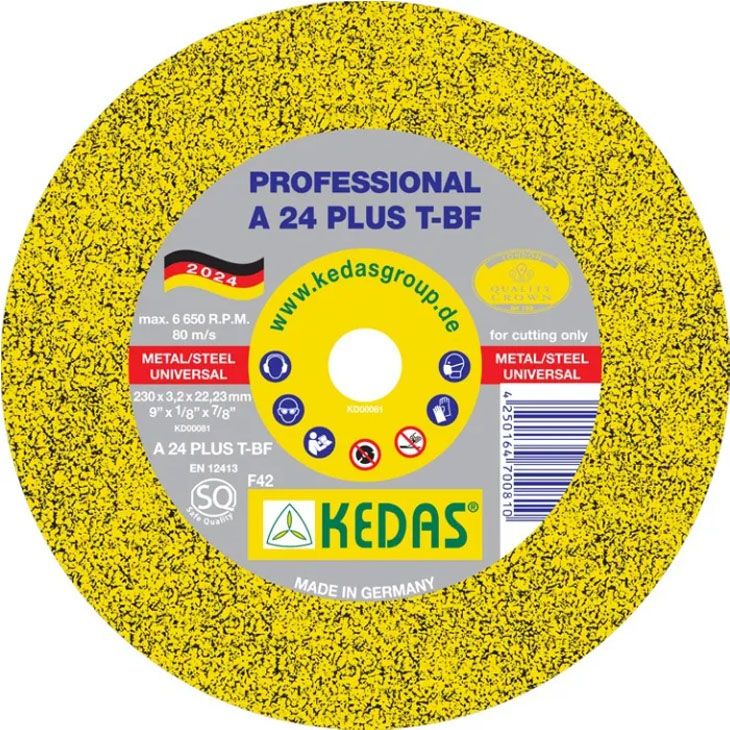
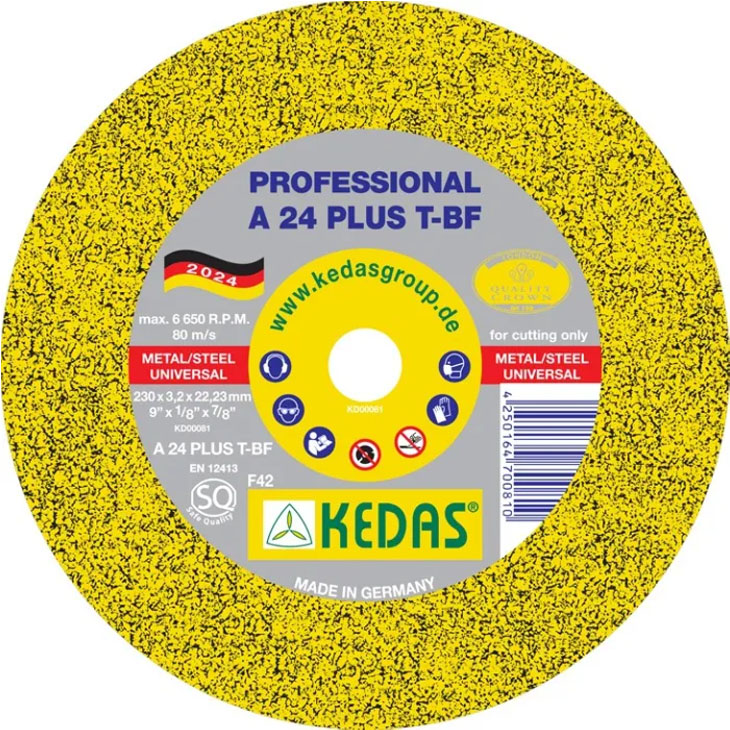
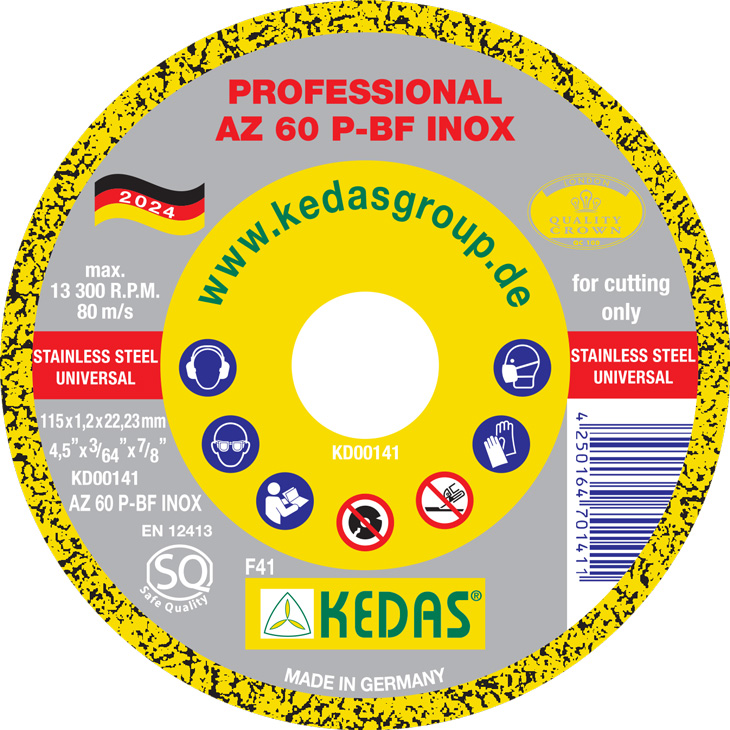
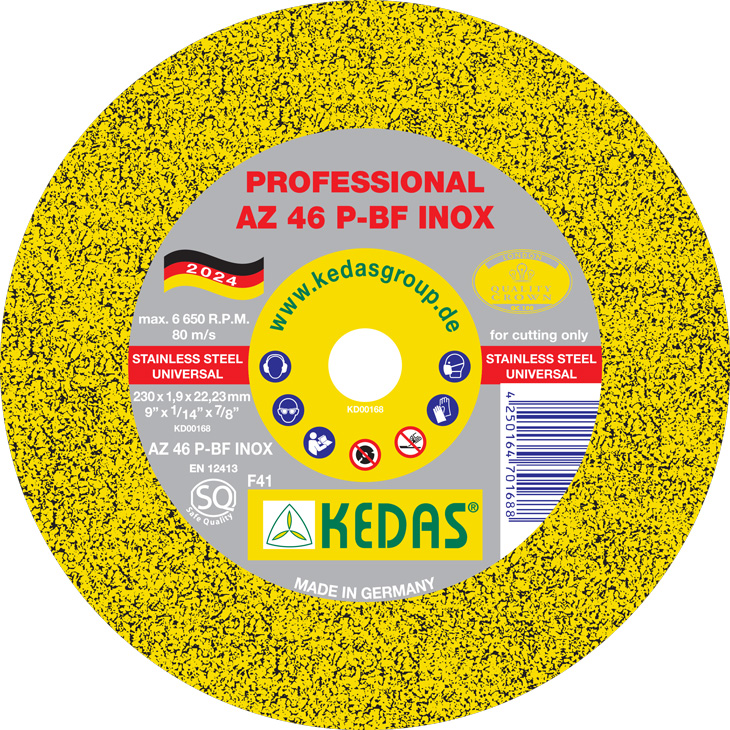
KEDAS Steel Cutting Disc A 24 PLUS T-BF 115 × 3.2 × 22.23 mm — SKU TL2-I108001KEDAS INOX Stainless Steel Cutting Disc AZ 60 P-BF 115 × 1.0 × 22.23 mm — SKU TL2-I108002KEDAS INOX Stainless Steel Cutting Disc AZ 46 P-BF 230 × 1.9 × 22.23 mm — SKU TL2-I108004
How workshops can measure wheel consumption without guessing
Rather than asking for a guaranteed number of cuts per disc, compare approved wheel use under consistent materials and safe operating conditions. This is a procurement measurement, not a recommendation to run unsafe informal trials.
Keep the workpiece metal, grade, section thickness and size consistent.
Record grinder model, manufacturer-approved speed and guarding arrangements.
Track disc SKU and wheel consumption for each job batch.
Count accepted cuts meeting the job's edge-quality requirements.
Calculate consumable cost per accepted cut = cost of wheels used ÷ accepted cuts.
Record damaged wheels and safety stops; never continue cutting with a damaged wheel to improve a metric.
Illustrative arithmetic, not a KEDAS performance claim: if consumed discs cost SAR 30 and 60 cuts are accepted, consumable cost averages SAR 0.50 per accepted cut. Include cutting time, quality and other costs in a full procurement decision.
Angle grinder safety checks before cutting
Use only the wheel diameters approved by the tool manufacturer; never mount a 230 mm wheel on a 115 mm-only grinder.
Never exceed the wheel's marked maximum RPM or override the grinder's operating limits.
Fit the appropriate cutting guard and operate with proper tool handling; never remove guards for access.
Secure work, control sparks and use suitable eye, face, hearing and respiratory protection.
Stop and isolate power when replacing a wheel or diagnosing cracks, vibration or mounting issues.
Buy KEDAS discs for Saudi workshops and contractors
Choose 115 mm steel A24, 115 mm stainless AZ60 or 230 mm stainless AZ46 according to metal and machine. Verify live checkout price, sales units and availability; offers and taxes may change totals. Saudi doorstep delivery depends on the carrier coverage for your address.
For Riyadh, Jeddah or Khamis Mushait warehouse pickup, complete the purchase first and then message MBMC on WhatsApp to coordinate collection after local stock confirmation. For project quantities, supply SKUs, required counts and destination and request a quote or fulfilment review; discounts are not promised without confirmation.
Frequently asked questions on fast cut-off wheel wear
Why does a metal cut-off wheel wear out so quickly?
Possible causes include unsuitable wheel grade, grinder speed dropping under load, excessive force, and workpiece movement. Check the complete cutting setup before attributing wear to product quality.
Does a 1 mm wheel always wear out faster than a 3.2 mm one?
Not necessarily. Abrasive grade, wheel construction, workpiece and conditions all affect service life; a valid comparison requires controlled testing.
Why does the disc diameter shrink while cutting?
Consumption of abrasive material is normal. Unusually fast wear calls for reviewing wheel type, material, tool load and cutting conditions.
Is every KEDAS disc suitable for steel and stainless?
If it cracks, chips, warps, develops mounting damage or causes abnormal vibration, stop, isolate the power and follow safe replacement procedures.
Can a 230 mm wheel fit a 115 mm grinder?
No. The grinder's approved diameter, guard and speed rating must not be bypassed.
Does more pressure make a cut faster?
Forcing a cut can slow the machine and increase the risk of binding or wheel damage. Follow the tool and wheel manufacturer's instructions.
How can a workshop measure cost per accepted cut?
Divide total wheels consumed by accepted cuts to measure consumption per cut, then use purchase cost to calculate cost per cut under consistent material and tool conditions.
Is the blog price the final customer price?
Use the live product page and checkout, where tax and promotions are applied.
Can contractors request quantities of KEDAS discs?
Prepare SKUs, quantities and destination, then contact MBMC via WhatsApp for a confirmed supply review.
Conclusion: lower waste begins with the correct wheel
Before replacing a wheel that wears quickly, inspect material suitability, wheel grade, grinder compatibility, mounting, workload and workpiece support. Then buy a published KEDAS model matching the actual requirements. Read our 115/230 mm metal cutting guide and 1 mm KEDAS INOX overview for the related product decisions.



 Workshop Equipment