Quick answer: To cut steel with an angle grinder safely, use a cut-off wheel approved for your metal, grinder diameter and maximum RPM. Clamp the pipe or section, mark the cut, use the correct guard and keep the wheel straight without side loading. For stainless, check for manufacturer-approved INOX compatibility.
How to Cut Steel with an Angle Grinder: 7 Steps
- Identify the metal and job: pipe, sheet or steel section.
- Match cutting wheel diameter, bore, approved material and RPM to the grinder.
- Check the wheel for damage before fitting.
- Clamp the work to avoid pinching the cut-off wheel.
- Use a suitable guard, PPE and spark-safe work area.
- Cut with control without twisting, side grinding or forcing the wheel.
- Wait for the wheel to stop and metal to cool.
4.5-inch vs 9-inch Metal Cutting Discs
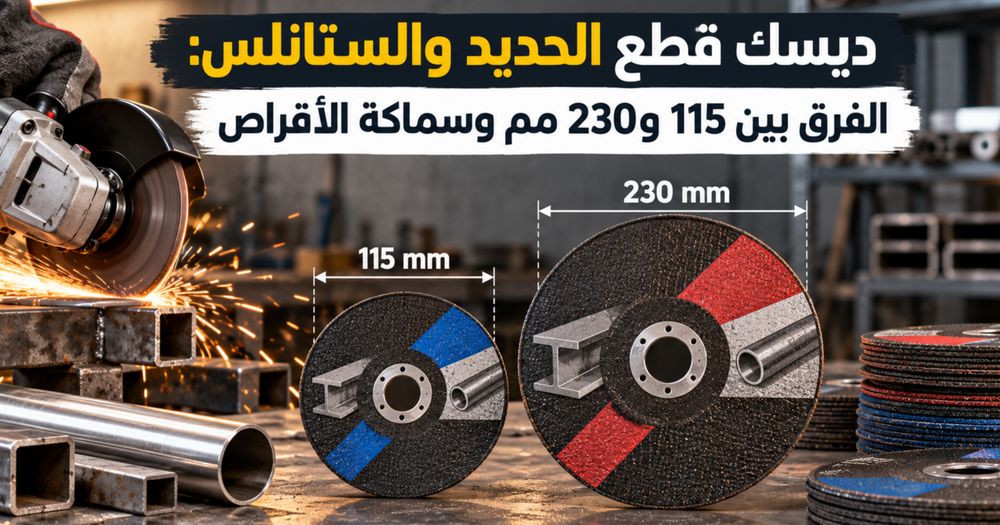
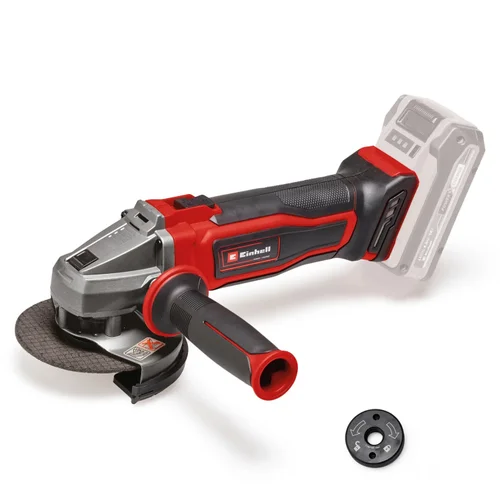
4.5 inches is approximately 115 mm and 9 inches approximately 230 mm. Use only sizes approved for the grinder and its guard. Larger wheels cannot simply be fitted to smaller tools.
Why Do Steel Cutting Discs Break or Bind?
Side pressure, twisting, poor workpiece support, damaged wheels and incompatible RPM or size are common hazards. Keep the cut straight, secure the work and follow the wheel and grinder instructions.
Steel vs Stainless: Which Disc?
Choose a manufacturer-approved disc for the material. INOX marking identifies a stainless-compatible option where specified. Avoid carbon-steel contamination of stainless surfaces.
Buy Metal Cutting Discs in Saudi Arabia
Browse power tool accessories and power tools at Al Mustaqbal Building Materials Store, confirming specifications and stock before purchase.
Further technical guidance: Choose a metal cutting disc by workpiece material, tool-approved diameter, wheel thickness, arbor size and maximum rated RPM. For stainless steel, use a manufacturer-approved INOX or stainless cutting wheel and avoid contamination from tools used on carbon steel. Never side-grind with a thin cut-off wheel or fit an oversized disc.
Metal vs. Stainless Steel Cutting Disc Selection
Job | Look for | Key check |
|---|
Thin sheet steel | Compatible thin cut-off wheel | Thickness, approved material and maximum speed |
Steel pipe or sections | Metal cutting disc sized for the grinder | Diameter, bore and guard compatibility |
Stainless sheet or tubing | INOX / Stainless Steel marking | Material compatibility and contamination control |
Grinding welds | Grinding wheel designed for side loading | Do not side-grind with thin cutting discs |
115 mm vs. 230 mm Cutting Discs
115 mm is about 4.5 inches and 230 mm about 9 inches. Larger wheels require compatible machines, guards and ratings; they cannot simply be mounted on a smaller grinder. Depth of cut and safe operating technique depend on the specific tool and wheel.
Is a 1 mm, 1.6 mm or 3 mm Disc Better?
Hilti sells thin steel and stainless cutting discs in thicknesses including 1, 1.6 and 2 mm. The manufacturer identifies cutting precision as one advantage of reduced thickness. No thickness is universally best: consider wheel specification, material, equipment and the manufacturer's approved use. Do not assume every thicker wheel is appropriate for aggressive cutting.
How to Read Cutting Wheel Markings
- Identify approved materials: Metal, Steel or INOX.
- Check outside diameter, bore size and thickness.
- Confirm the wheel's maximum rated RPM is not below the grinder's operating speed.
- Read wheel type and applicable standards, such as EN 12413 for relevant bonded abrasives.
- Inspect for damage, storage warnings and an expiry date where marked.
Can I Use a General Metal Disc on Stainless Steel?
Not every general-purpose metal wheel is suitable for corrosion-sensitive stainless applications. Use a disc approved for INOX/Stainless Steel and keep tools and accessories free from carbon-steel contamination to reduce the risk of surface rust staining.
Essential Angle Grinder Cutting Safety
- Use the correct cutting guard and never remove approved guarding.
- Wear appropriate eye and face protection, hearing protection and suitable respiratory protection.
- Secure the workpiece and control sparks around combustible materials.
- Never twist, bend or apply sideways grinding force to a thin cut-off disc.
- Disconnect power for wheel changes and inspect wheels before use.
- Use a controlled feed, without forcing the wheel through material.
Common Disc Selection Mistakes
Common mistakes include fitting 230 mm discs to 115 mm machines, ignoring RPM limits, using cut-off wheels for grinding, cross-contaminating stainless, and using damaged or improperly stored wheels.
Shop Metal Cutting Discs and Power Tool Accessories in Saudi Arabia
Compare power tool accessories and power tools at Al Mustaqbal Building Materials Store. Confirm machine size, material and bore compatibility before ordering.
Frequently Asked Questions
Which cutting disc is suitable for stainless steel?
Choose a compatible wheel marked INOX or Stainless Steel, with the correct diameter, bore and RPM rating.
Is a 1 mm disc better than a 3 mm disc?
Not universally; suitability depends on material, cut type, tool and the manufacturer's wheel specification.
Can I use a cutting disc to grind?
Do not side-grind with a thin cut-off wheel unless explicitly approved by its manufacturer.
What is the difference between 115 and 230 mm discs?
They have different outside diameters and need appropriately rated grinders and guards.
Why do cutting discs break?
Potential causes include impact damage, twisting, incorrect mounting, sideways loading and overspeed.
Can any steel wheel cut aluminum?
No. Some softer metals need an anti-loading abrasive formulation specified for that material.
Conclusion
Correct disc selection depends on material, wheel dimensions, RPM rating and approved operating technique. Explore power tool accessories and check the product specification before purchase.
Technical Sources
Hilti Saudi Arabia – AC-D SP Thin Cutting Disc; Bosch Professional – Angle Grinder Instructions.
Steel and Stainless Cutting Discs at Al Mustaqbal Store
Start with grinder compatibility and metal type rather than wheel size alone. Examples from the store's catalog:
Safety: Never mount a 230 mm wheel on a grinder intended for 115 mm wheels. Check the maximum rated RPM, bore, compatible guard and manufacturer's instructions.
Technical reading: Norton: cutting vs grinding and OSHA: angle grinder safety.
Choose KEDAS cutting discs by metal and grinder size
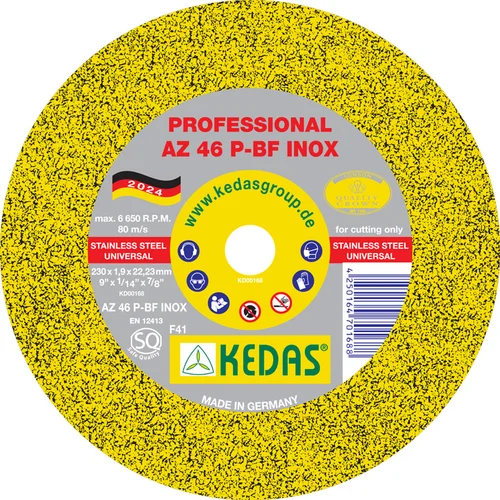
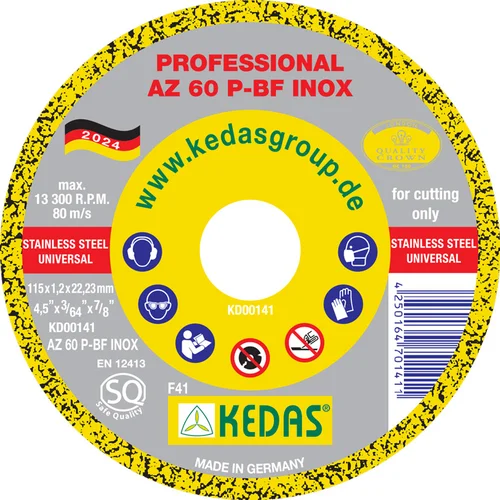
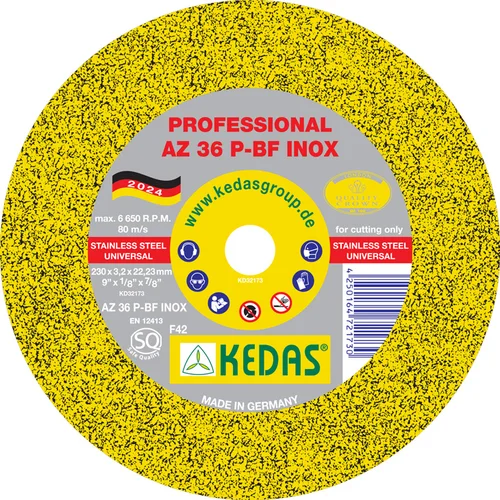
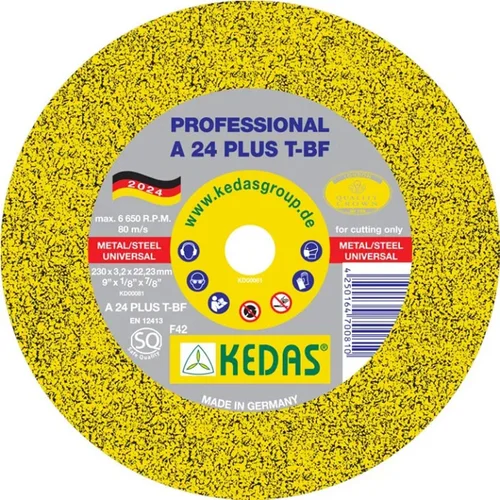
Start with the metal: For compatible ordinary steel and a 115 mm grinder, review KEDAS A24 PLUS 115 × 3.2 mm. For stainless steel using a 115 mm grinder, compare KEDAS INOX AZ60 at 1.0 mm thickness. For stainless with a manufacturer-approved 230 mm grinder, see KEDAS INOX AZ46 at 1.9 mm thickness. Cut-off wheels are not side-grinding wheels. Never use a wheel diameter beyond the grinder's approved limit.
Stock check: KEDAS A24 PLUS steel 230 × 3.2 mm is a published item but had zero recorded quantity in Riyadh, Jeddah and Khamis Mushait warehouses on 5 November 2026. Do not treat it as immediately available. The three other KEDAS models named above had recorded quantities, but final local fulfilment and shipping must be checked during checkout.
Bulk KEDAS requests for contractors and workshops
For jobsite or workshop quantities, prepare metal type, grinder size, product SKU, requested quantity and destination city. Message MBMC on WhatsApp to review quantity and supply options. No wholesale discount or carton size is promised without a confirmed quotation. Choose available Saudi shipping at checkout; for pickup, finish purchase first then arrange warehouse collection.
Shop KEDAS Steel Cutting Discs at Al Mustaqbal
Looking for the right disc for steel fabrication, welding or stainless work? Explore KEDAS 4.5-inch and 9-inch options and choose the compatible diameter, thickness and wheel rating for your grinder.
Ready to choose? Browse cutting discs and power tool accessories, compare specifications and place an order or request an availability alert when offered.



 Tools & Equipment