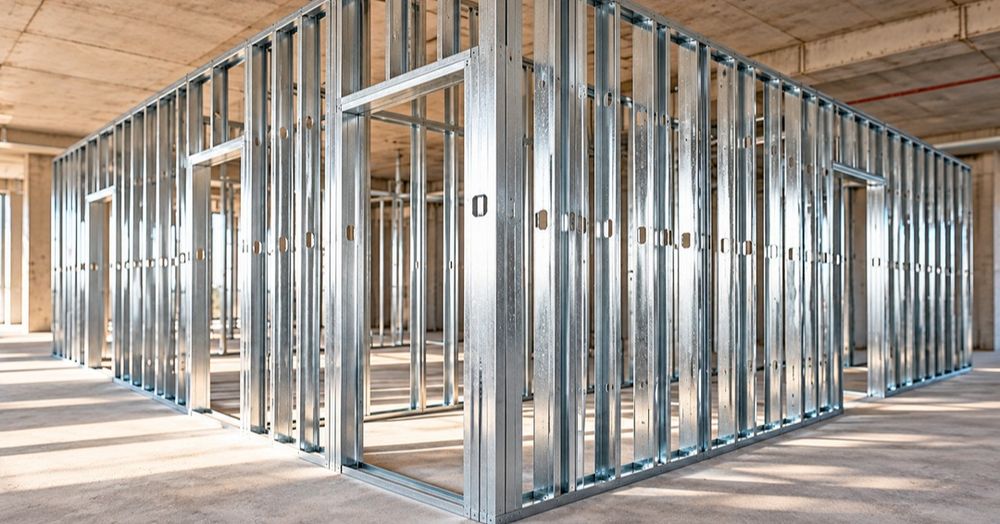
Quick answer: A metal stud is the upright framing member supporting plasterboard, while a track is a channel typically fixed at floor and ceiling to receive the studs. Select profile width, gauge and spacing from the approved partition system based on height, lining layers, fire and acoustic requirements and movement details—not height alone.
Metal Stud vs. Track
Component | Role | Check |
|---|
Vertical metal stud | Supports board and frames the partition | Width, gauge, length and system rating |
Floor/ceiling track | Guides and fixes the stud assembly | Compatibility and fixing details |
Deflection head track where required | Accommodates defined movement | Approved engineering detail |
Framing connectors | Join framing members | Approved fastener type and steel gauge |
Common Metal Stud Widths
British Gypsum Gypframe systems include nominal profile widths such as 48, 60, 70 and 92 mm, with other profiles for selected applications. These examples do not mean every size is stocked locally or interchangeable across manufacturers.
Choosing Stud Width for Partition Height
British Gypsum's maximum-height guidance shows that permitted heights change with stud profile, stud spacing, board layers and board thickness. Use the system's approved height and performance tables instead of selecting a profile by width alone.
400 mm vs. 600 mm Stud Spacing
Some systems provide stud centers such as 400 or 600 mm. Allowable spacing depends on wall height, board type and required performance. Do not apply a single spacing rule to every wall or ceiling.
Ceiling Profiles vs. Partition Profiles
Suspended ceilings often use dedicated channels, hangers and framing configurations different from wall studs. Do not substitute components without approved system details, particularly where services and other loads are involved.
Installation Checklist
- Obtain the approved partition detail.
- Confirm height and fire, acoustic, moisture and load requirements.
- Choose compatible studs and tracks.
- Check metal gauge, corrosion protection and service openings.
- Fix members using specified fasteners and spacing.
- Follow board fixing and movement joint details.
Board Screws vs. Framing Screws
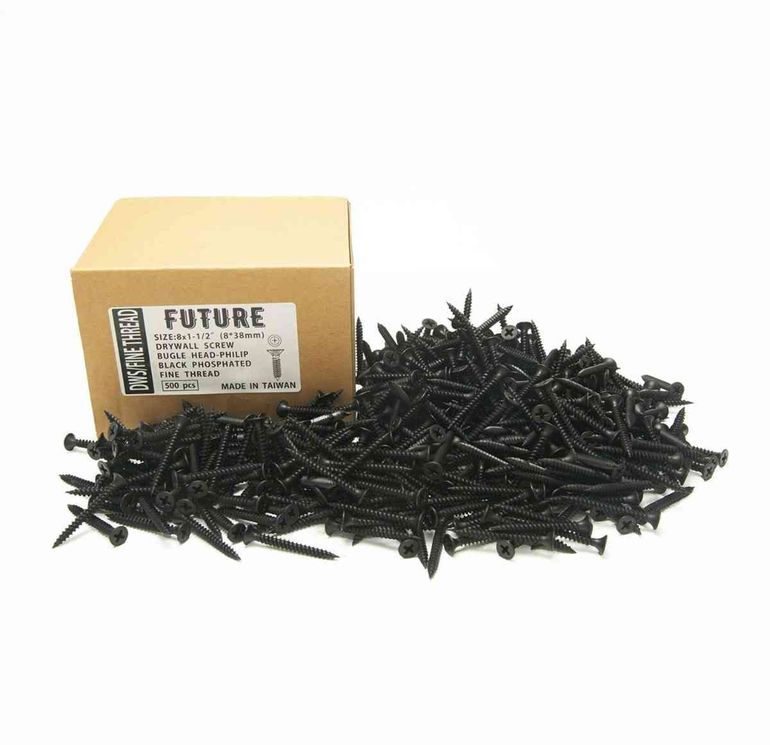
Metal-to-metal screws may use a wafer head, whereas board-fixing screws use profiles designed to seat correctly into plasterboard. They are not automatically interchangeable. Compare drywall screws and fixings by specification.
Shop Gypsum Metal Studs and Tracks in Saudi Arabia
Browse metal studs and tracks and gypsum board accessories at Al Mustaqbal Building Materials Store. Confirm width, gauge, length and availability.
Frequently Asked Questions
What is the difference between stud and track?
Studs are vertical framing members; tracks are horizontal channels receiving them.
Is a 70 mm stud better than 48 mm?
Not automatically; selection depends on the rated partition system.
Is 600 mm spacing suitable for every wall?
No. Check wall height, board system and fire or acoustic requirements.
Can ceiling profiles replace wall studs?
Do not substitute them without approved system documentation.
Does metal gauge affect stud strength?
It is one factor, alongside profile geometry, height, spacing and assembly details.
Conclusion
Select studs and tracks as a compatible, specified system. Explore metal framing profiles.
Technical References
British Gypsum – GypWall Single Frame; System Specification.
Related Products in Our Store
Check product details, specifications and availability before ordering.



 Gypsum & Decorative Works