Quick answer: Paint bleeding under painter's tape often comes from dust, textured surfaces, gaps at the tape edge or stretching the tape during application. Peeling paint during removal can be caused by weak underlying adhesion or a dried paint bridge across the edge. For clean lines, prepare the surface, choose a compatible tape, seal its edges and follow that tape manufacturer's removal instructions.
Why Does Paint Bleed Under Painter's Tape?
Common causes are dust, moisture, rough texture, unsealed tape edges, stretched tape and unsuitable adhesion. Even a quality tape will struggle on a poorly prepared surface.
Painter's Tape Problems and Fixes
Problem | Possible cause | Action |
|---|
Paint leaks underneath | Dust, gaps or textured surface | Clean, press edges and test suitable tape |
Paint peels with tape | Poor adhesion or dry paint bridge | Follow removal timing; carefully score if recommended |
Adhesive residue | Unsuitable tape or excessive dwell time | Observe clean-removal limits and safe cleanup |
Tape fails to stick | Dust, dampness or unsuitable substrate | Prepare surface and use compatible tape |
Crooked paint edge | Stretching or gaps | Lay tape without stretching; seal edges |
How to Get Sharp Paint Lines
- Clean and dry the surface; check the soundness of existing paint.
- Choose the tape for the substrate, including delicate or recently painted finishes where appropriate.
- Test a hidden spot when uncertain.
- Apply without stretching and press the edges using a suitable non-sharp tool.
- Apply paint as specified without overloading the tape edge.
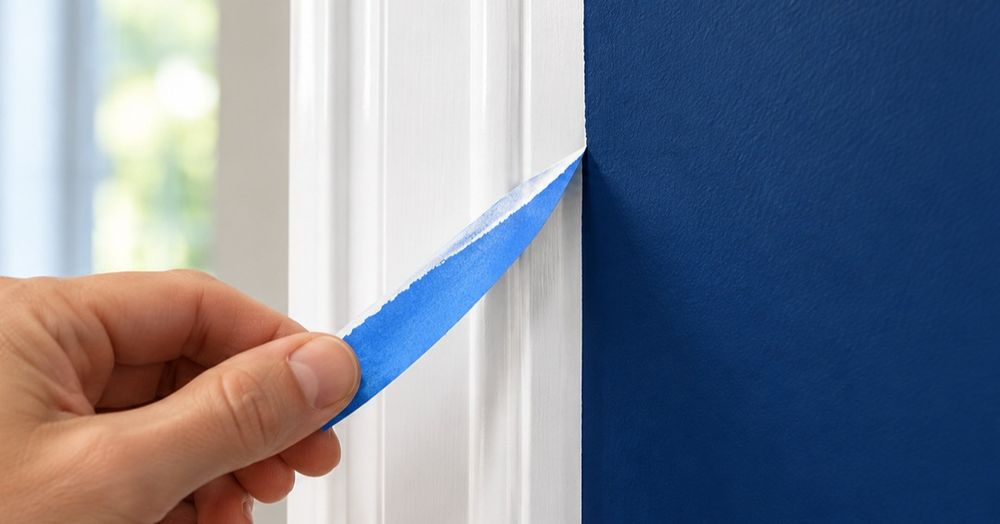
- Remove as directed by the exact tape manufacturer, slowly and often by pulling back at about 45 degrees.
When Should You Remove Painter's Tape?
Removal timing varies by brand and product. Certain ScotchBlue instructions call for waiting until the paint is dry to the touch. FrogTape instructions for specific products recommend removal while paint is still wet. Always follow your product's label. If dried paint bridges the tape edge, the manufacturer may recommend carefully scoring the edge before removal.
Delicate Surface vs. Multi-Surface Painter's Tape
Delicate or recently painted finishes may need specially formulated lower-adhesion tapes and the manufacturer's recommended waiting periods. More robust surfaces may suit multi-surface products. Avoid high-bond tape on unsound finishes.
Can You Use Ordinary Adhesive Tape for Painting?
Painter's tapes are designed for clean lines and controlled removal under defined conditions. Ordinary packaging or office tapes may leave residue or damage finishes and should not be assumed interchangeable.
Common Mistakes
- Applying tape over dusty or damp paint.
- Stretching tape around corners.
- Leaving tape beyond its clean-removal period.
- Using the wrong adhesion level on delicate surfaces.
- Pulling too fast or at an unsuitable angle.
- Failing to test weak or old paint.
Shop Painter's Tape in Saudi Arabia
Explore tapes and adhesives and painting tools at Al Mustaqbal Building Materials Store. Compare surface compatibility, adhesion and clean-removal time before buying.
Frequently Asked Questions
Why is paint bleeding under the tape?
The tape may not be sealed against a dusty, rough or uneven surface, or may have been stretched during installation.
When do you remove painter's tape?
Follow the particular product: some recommend wet removal, others dry-to-touch removal.
How do you remove tape without peeling paint?
Pull slowly at the recommended angle and score a hardened paint bridge when the product instructions call for it.
Can painter's tape be used on painted wood?
Only if compatible with that finish and after a small test when uncertain.
Why does painter's tape leave residue?
Possible reasons include unsuitable adhesive, excessive exposure time or incompatible environmental conditions.
Conclusion
Clean paint lines require the right tape, correct preparation and product-specific removal timing. Browse tapes and adhesives.
Technical Sources
ScotchBlue – Proper Tape Removal; FrogTape – Application and Removal.
Related Products



 Painting & Decoration Tools