STANLEY Wood Chisels: 8 vs 12 vs 32mm or 3-Piece Set?
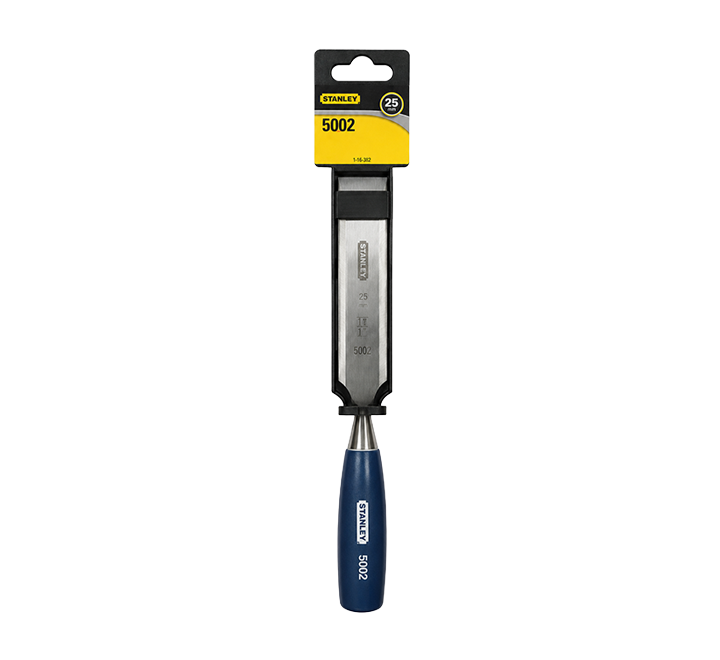
Should you buy an 8 mm, 12 mm or 32 mm wood chisel, or a three-piece STANLEY set? Start with the width of the hinge recess, wood joint or trimming task. A narrower chisel is often useful for small corners, a medium one for suitable joinery and a wider blade for broader trimming. MBMC Store publishes individual STANLEY 5002 chisels as well as a three-piece 12, 18 and 25 mm set.
This article helps Saudi buyers decide between an individual chisel and a set by actual size, application and SKU. For a complete list of woodworking tools, see the general hand-tool guide for carpenters; this page focuses on purchasing the right chisel widths.
When is a wood chisel useful for doors and joinery?
Wood chisels can remove small amounts of material for a hinge recess, timber joint, edge trimming or fitting work. Measure and mark the required cut before starting. A wood chisel should not be treated as a general metal, concrete or tile chisel.
For door hinges, mark the edge and required recess depth, secure the workpiece and remove thin controlled layers of timber. Avoid unnecessary removal that would leave the hinge loose or uneven.
These figures represent nominal blade width, not the depth of the cut or the distance removed in one stroke. Select according to the actual recess width and access required.
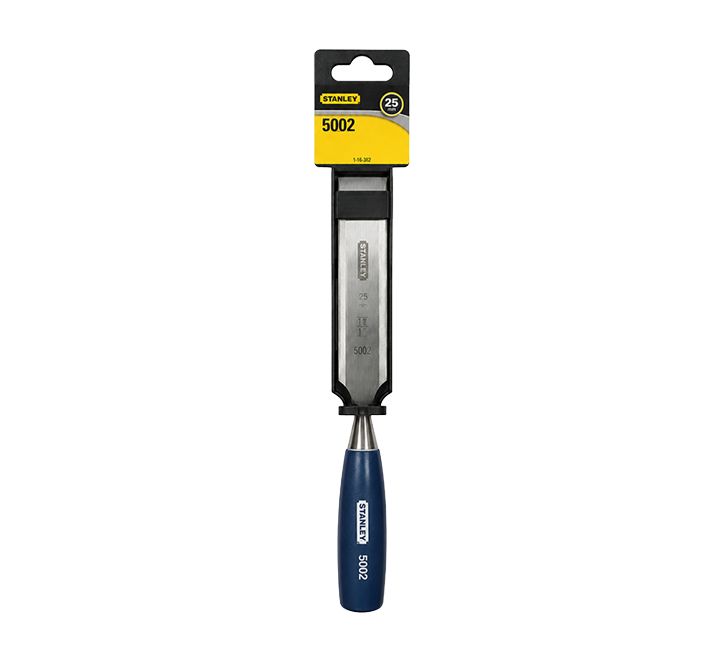
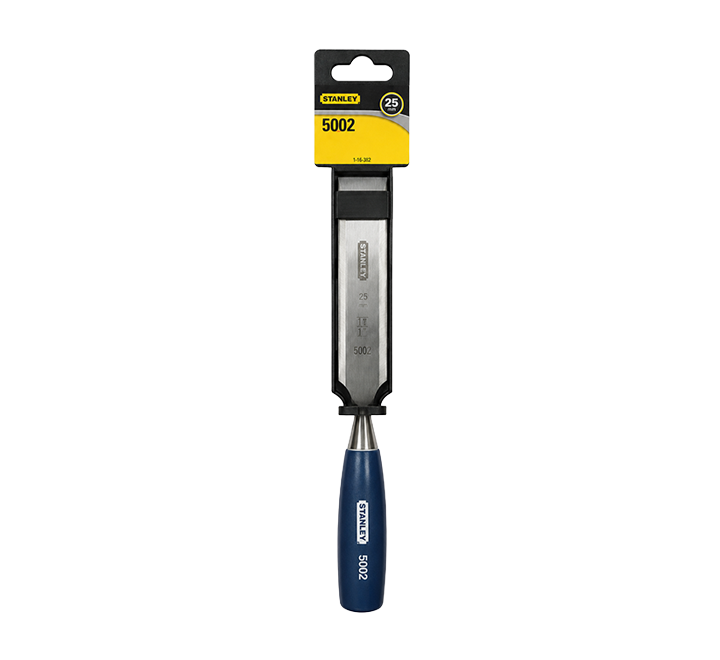
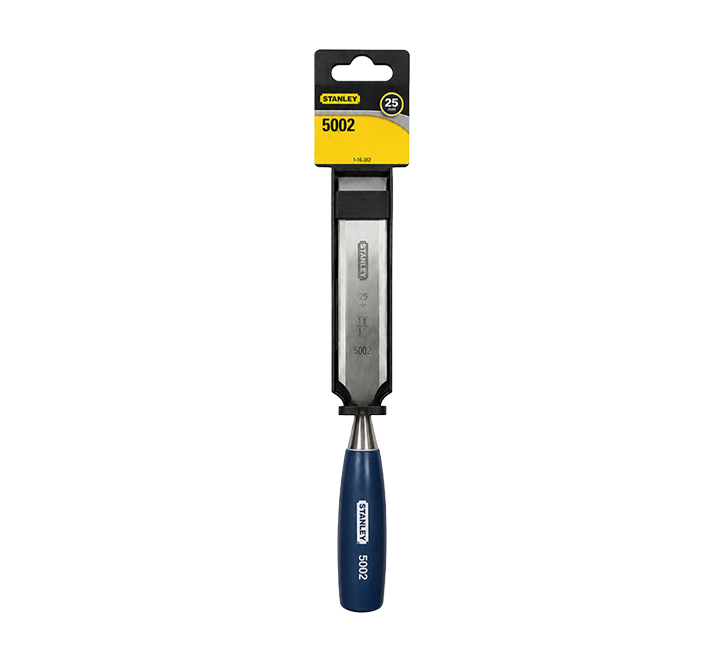
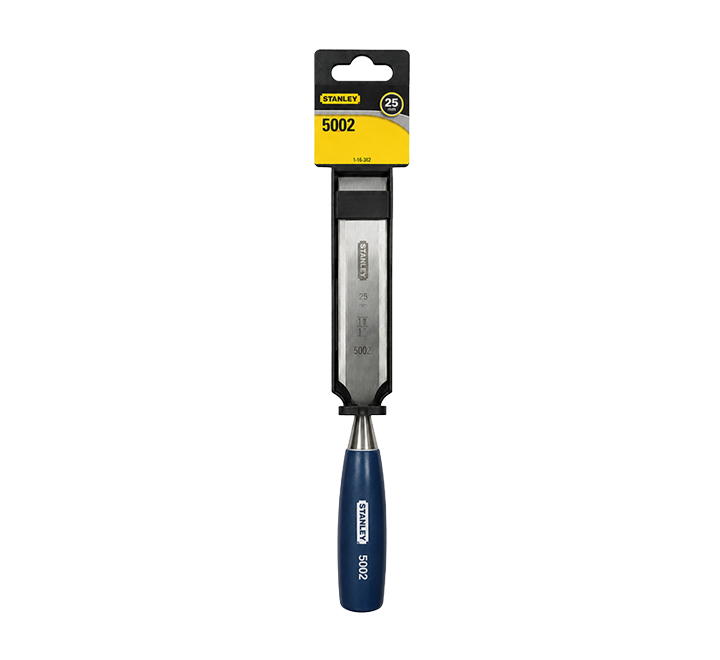
The STANLEY 8 mm 5002 series chisel, MBMC SKU ST2-I71035, offers a narrow blade for compatible small-scale trimming and woodworking tasks. A narrower chisel is not automatically faster on broad surfaces; it is primarily useful where controlled access matters.
Manufacturer specifications describe hardened and tempered steel blade construction and an impact-resistant polypropylene handle. Use the supplied protective blade cover where applicable and maintain the cutting edge safely.
STANLEY 12 mm wood chisel, SKU ST2-I71037, is an individual blade suitable for work where a 12 mm width matches the required joint or recess. It is not a universal standard for every door hinge; measure your component and mark the recess first.
For repeated carpentry jobs with several recess widths, buying a set can be more flexible than trying to make one chisel perform every operation.
The STANLEY 32 mm chisel, MBMC SKU ST2-I71044, has a broader blade that may suit suitable wide surfaces or fitting tasks. It is not automatically more accurate or appropriate for narrow hinge corners.
Choose the blade width that lets you stay within your marked cut, not simply the largest width on the shelf.
STANLEY 0-16-128 three-piece set: 12, 18 and 25 mm
The published STANLEY 5002 series three-piece set, MBMC SKU ST2-I71046, contains 12 mm, 18 mm and 25 mm chisels. STANLEY documents hardened and tempered blades, polypropylene handles and blade guards. The set does not include 8 mm or 32 mm chisels.
It is useful to compare when you routinely work on different furniture joints or doors. If your project requires a precise 8 mm recess or broad 32 mm trimming, buy the appropriate single model rather than assuming it is part of the set.
Choosing a wood chisel for a door hinge recess
Measure and mark the hinge outline and intended recess depth.
Select a blade width that allows control inside the marked outline.
Secure the timber, keeping hands out of the blade's cutting path.
Check the wood grain and remove thin layers rather than forcing a deep cut.
Do not strike an unsuitable chisel with a metal hammer unless the model instructions permit it.
Test the hinge fit before removing more wood.
A smaller blade can be useful for corners and a wider one for open trimming, but never force a blade through a recess narrower than its width. If you are unfamiliar with cutting hinge mortises, a professional carpenter can help avoid permanent door damage.
Single chisel or three-piece set: practical purchase guide
Check blade width, number of pieces, product packaging and final live price. A set is not automatically the right purchase when it lacks the width needed for the job.
Common mistakes and chisel safety
Choosing a blade wider than the recess.
Failing to secure the wood.
Using a dull blade and compensating with excessive force.
Driving the wood chisel into concealed nails or other metal objects.
Putting fingers or the body in front of the cutting edge.
Using a woodworking blade on masonry, gypsum or metal.
Storing without protection or leaving moisture on the blade.
Wear appropriate protection, keep the cutting path clear and follow the model instructions. The edge remains sharp even when the chisel is not being used.
Wood chisel prices, delivery and pickup in Saudi Arabia
Choose shipping to your Saudi address where a carrier is offered. For warehouse pickup in Riyadh, Jeddah or Khamis Mushait, complete your order first and then contact MBMC via WhatsApp to arrange collection subject to location-specific stock. If the public site reports unavailable despite back-office stock, confirm eligibility before payment.
Frequently asked questions before buying wood chisels
What is an 8 mm wood chisel used for?
For compatible narrow recesses, detail work and corners where the 8 mm blade fits.
Should I buy 12 mm or 32 mm?
Measure the recess or trimming area first. Narrow widths are generally easier in tight spaces, while a wider blade may suit broader work.
What sizes are in the STANLEY 0-16-128 set?
The three chisels are 12, 18 and 25 mm.
Does set 0-16-128 include an 8 mm chisel?
No. The 8 mm model is a separate item.
Can a wood chisel cut concrete or steel?
Do not substitute a wood chisel for a masonry or metal chisel.
What chisel size works for door hinge recesses?
Use a width that fits within the actual measured hinge recess, not a universal one-size-fits-all number.
Do wood chisels need blade maintenance?
Keep the edge properly maintained and protected according to the product instructions. Do not use damaged blades.
Is a 32 mm chisel good for tiny corners?
Usually a narrower blade offers more controlled access in tight recesses.
Where can I buy STANLEY wood chisels in Saudi Arabia?



 Tools & Equipment