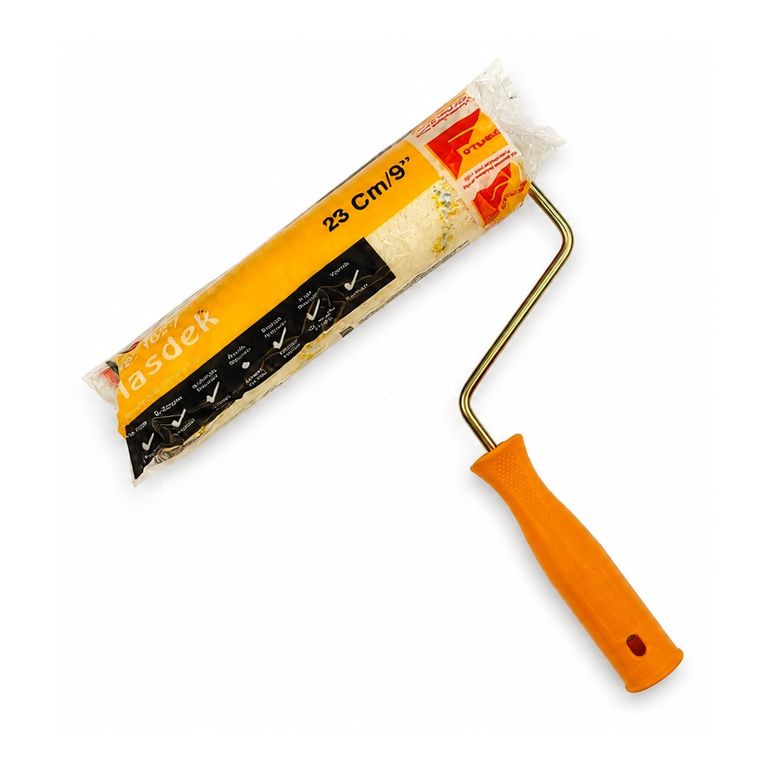
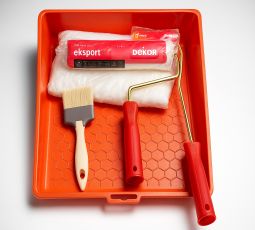
Quick answer: An epoxy roller cover must be compatible with the exact coating and should resist shedding, with solvent resistance where required. Some industrial epoxy systems specify lint-free short-nap covers around 3/16–3/8 inch (5–10 mm), while others recommend 3/8–1/2 inch (10–13 mm) or a squeegee-and-backroll procedure. Always follow the product technical data sheet.
Why Are Epoxy Roller Covers Different?
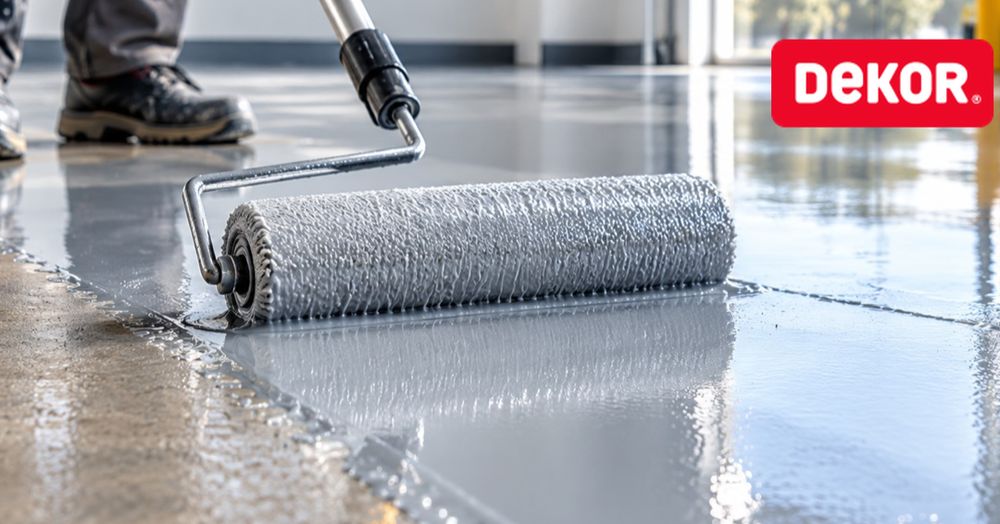
Two-component epoxy products can have limited pot life and differing viscosities, solvents and film-thickness requirements. Roller fiber, core compatibility, shedding resistance and application technique all influence the finish.
Epoxy Roller Selection by Application
System | Possible tool | What to check |
|---|
Thin roller-applied epoxy coating | Low-nap non-shedding cover | Specified nap and target film thickness |
Medium-viscosity floor coat | Shed-resistant cover, possibly after squeegee spreading | Backrolling technique and cure conditions |
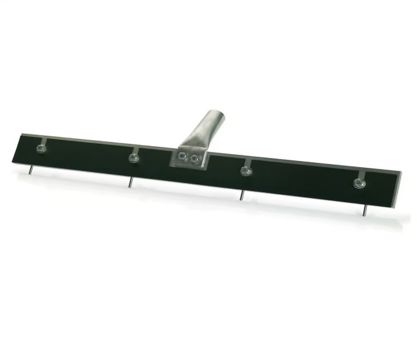
Self-leveling epoxy | Specified squeegee or trowel, possibly spiked roller | System instructions; do not substitute a paint roller |
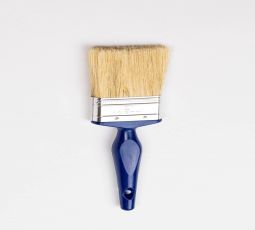
Edges and corners | Compatible brush or mini roller | Working time and material compatibility |
What Nap Length Should an Epoxy Roller Have?
Some industrial coatings specify lint-free 3/16–3/8 inch roller covers, while others specify 3/8–1/2 inch. There is no universal best nap length, because the coating formulation, substrate and specified film thickness vary.
Why Does Epoxy Develop Bubbles or Roller Marks?
Potential causes include concrete outgassing, excessive air introduced during mixing, inadequate preparation, unsuitable temperatures, and overworking material as it begins to cure. Investigate the specific cause instead of adding solvent or pressing harder with the roller.
How to Apply Epoxy Without Visible Roller Defects
- Verify surface preparation, moisture and primer requirements.
- Read the mixing ratio, pot life, application window and recoat interval.
- Use the approved shed-resistant roller and any specified squeegee.
- Control application thickness and maintain a wet edge.
- Avoid repeated rolling once the material begins to set.
- Replace the cover if catalyzed coating hardens on it.
- Follow SDS ventilation and personal protective equipment guidance.
Epoxy Paint Rollers vs. Spiked Rollers
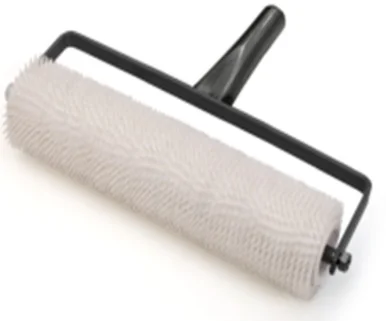
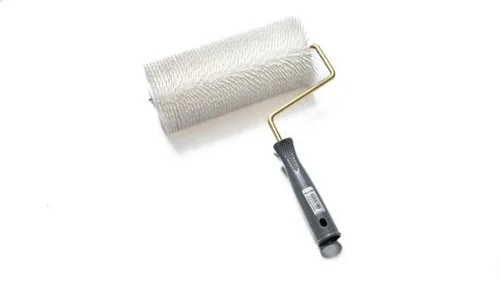
A standard application roller spreads coating when permitted by the system. A spiked roller may be used on certain self-leveling systems to release trapped air after spreading. They do not perform the same task.
Common Epoxy Rolling Mistakes
- Using a cover that sheds fibers.
- Ignoring mix ratios and pot life.
- Skipping concrete moisture assessment.
- Overworking partially curing material.
- Choosing an unapproved nap length.
- Neglecting ventilation and safety requirements.
Buy Epoxy Roller Covers in Saudi Arabia
Explore epoxy rollers, paint rollers and painting tools at Al Mustaqbal Building Materials Store. Check compatibility, size and available stock.
Frequently Asked Questions
Can I use a regular paint roller for epoxy?
Only if its cover is approved for that particular epoxy system. Not every conventional cover is suitable.
Which nap length works best for epoxy?
Some systems require about 5–10 mm and others approximately 10–13 mm; follow the coating data sheet.
Why does my epoxy roller shed lint?
The cover may be unsuitable, damaged or not adequately shed-resistant.
What causes bubbles in epoxy floors?
Possible causes include concrete outgassing, mixing air and application conditions.
When should I replace the epoxy roller cover?
When coating starts curing on it, the cover deteriorates or the manufacturer requires replacement.
Is a spiked roller the same as an epoxy paint roller?
No. Spiked rollers serve specific air-release purposes in some self-leveling systems.
Conclusion
Start with the epoxy system technical sheet, then choose a compatible low-shedding roller and the required nap. Browse epoxy rollers at Al Mustaqbal Building Materials Store.
Technical Sources
Florida Paints – Flo-Poxy Product Data Sheet; Ressichem – Ressi EPO Color Coat.
Related Products



 Painting & Decoration Tools